The restroom was cleaned before opening. By lunchtime, the paper towels are empty, the trash is full, and someone has reported a wet floor.
That doesn’t necessarily mean the cleaning crew missed something. It may mean the schedule doesn’t match how the restroom is being used.
A useful commercial bathroom cleaning checklist covers more than the nightly cleaning. It tells your team what to clean, what to check between cleanings, and which problems need someone else’s attention.
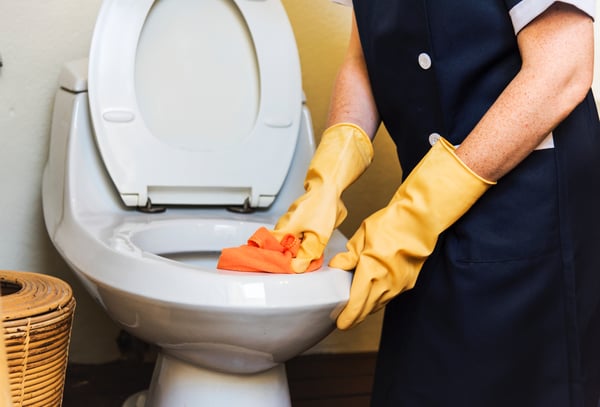
Start with the supplies your crew actually needs
Before changing the checklist, look at the cart.
Your team should have surface-compatible cleaners, the appropriate disinfectant where needed, toilet and urinal cleaning tools, clean cloths, floor-cleaning equipment, waste liners, and replacement soap and paper products. Include signs or barriers to control access while work is underway.
Keep toilet-cleaning tools separate from tools used on sinks, counters, and other surfaces. If you use a color system, make sure everyone knows it. A colored cloth only helps when the crew understands where it belongs.
Choose protective equipment from the product instructions and safety data sheet. OSHA’s cleaning-chemical guidance also calls for training on chemical hazards, safe handling, dilution, and spill procedures before employees use hazardous cleaners.
You don’t need a different bottle for every fixture. You do need to know which products are suitable for the surfaces in that restroom.
A daily bathroom cleaning checklist
Use this as a starting point for routine cleaning, then adjust it to your building’s procedures and traffic.
- Control access. Check for occupants and place signs or barriers before starting.
- Inspect the room. Identify leaks, damage, blocked fixtures, and anything requiring a separate response procedure.
- Remove waste. Empty trash and sanitary disposal containers according to facility procedures. Replace liners and clean containers as needed.
- Clean mirrors, dispensers, sinks, and counters. Work from cleaner areas toward dirtier areas, changing cloths as needed.
- Clean toilets and urinals. Include handles, seats, exterior surfaces, bases, and surrounding splash areas—not just the bowl.
- Disinfect designated surfaces. Follow the facility’s plan and the product label, including surface compatibility and contact time.
- Refill supplies. Check soap, toilet tissue, and paper towels. Operate each dispenser to confirm it works.
- Clean the floor last. Remove loose soil, then use the appropriate floor-cleaning method. Pay attention to corners, behind fixtures, and around bases.
- Inspect before reopening. Confirm that the room is ready for use, supplies dispense correctly, and remaining problems have been reported.
“Disinfect” needs more instruction than a checkbox. CDC guidance explains that dirt can interfere with disinfection and that surfaces must stay wet for the product’s specified contact time. Follow the label’s cleaning and application directions; a quick spray followed by an immediate wipe may miss that requirement.
Build that time into the work. The crew shouldn’t have to choose between following the label and finishing the route.
Daytime checks should match restroom traffic
A full cleaning once a day may work for a lightly used office restroom. A busy school, public building, or facility with shift changes may need checks throughout the day.
Those checks can be brief. Look for empty dispensers, overflowing waste, visible soil, leaks, and wet floors. Record the time, initials, and anything that still needs attention.
Start by checking around your busiest periods. If paper towels consistently run out after lunch, schedule a check before that happens.
There’s a cost decision here, too. More frequent checks take staff time. A larger dispenser may reduce refill trips, but it won’t solve leaks, overflowing trash, or a room that needs cleaning. Identify what’s driving the extra visits before buying equipment.
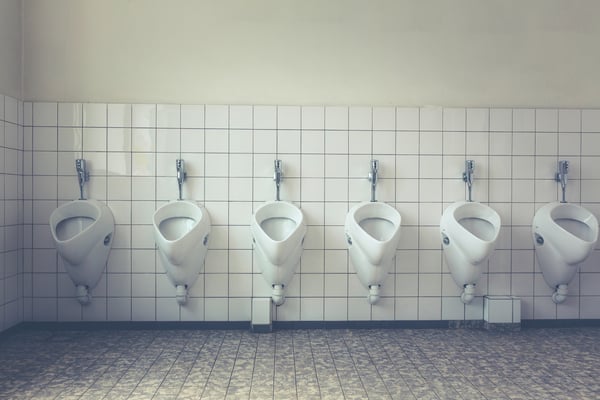
Put periodic work on a separate schedule
Daily checklists get difficult to use when every possible task ends up on them.
Keep a separate schedule for work such as cleaning high ledges and vents, washing partitions, detailing hinges and fixture bases, cleaning waste containers, and addressing buildup on floors and grout.
Set the frequency from inspection results. Some tasks may need weekly attention. Others may be less frequent. Visible soil shouldn’t wait simply because its scheduled day hasn’t arrived.
Match the cleaning method to the material. A product intended for a toilet bowl may be unsuitable for a counter, metal finish, or floor. Check compatibility before using a stronger chemical to solve a recurring problem.
For mixing questions, use Action’s dilution guide alongside the product label.
When the room still smells, find the source
Adding fragrance doesn’t tell you why an odor keeps returning.
Inspect around toilet and urinal bases, beneath fixtures, inside waste containers, and in areas where soil collects. Check cleaning tools, too. A dirty mop or cloth can leave the room needing another cleaning.
If routine cleaning doesn’t resolve the issue, document where and when it occurs and involve maintenance. A leak, drainage problem, or ventilation issue needs a different response from another round of cleaner.
Give the next person something useful to work with: the location, what was checked, and what remains unresolved.
Make the checklist easy to hand over
“Bathroom done” leaves too much open to interpretation.
A usable checklist names the area, the task, the expected result, and who handles exceptions. Walk through it with a new employee and watch them complete the work. That’s where unclear instructions become obvious.
Keep healthcare, childcare, food-service, and other specialized requirements in the facility’s own procedures. A general checklist is a starting point, not a replacement for the rules that apply to your building.
Choose one restroom this week and compare the checklist with what actually happens during a busy day. If your crew keeps returning for the same problem, that’s where we’d look first.
If you’re unsure whether the issue is the product, dispenser, cleaning method, or schedule, tell Action what you’re using now and what keeps happening. We’ll help you figure out the next step.
Questions or comments?