
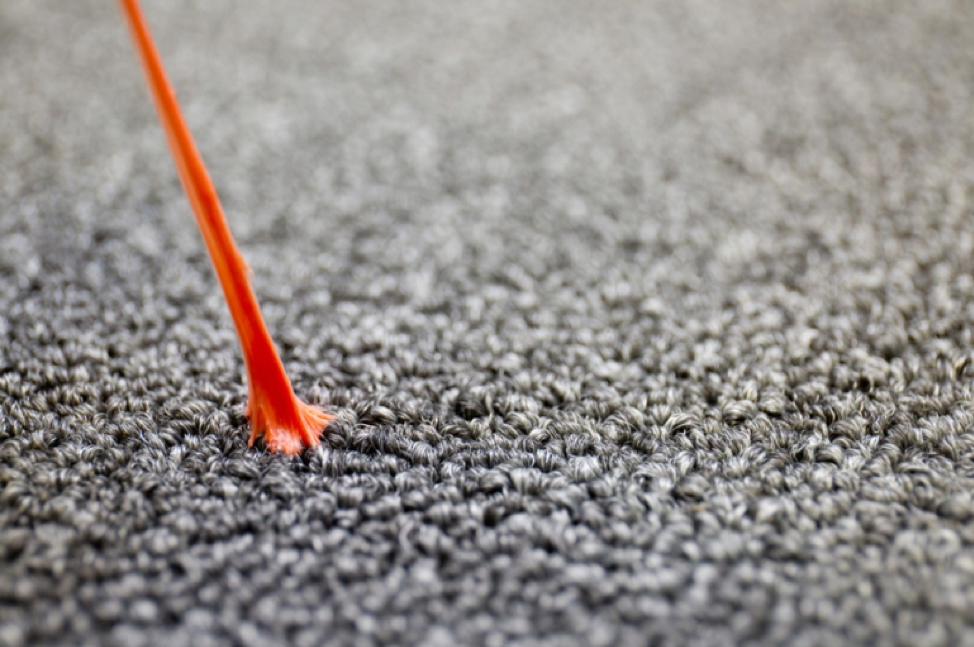
Gum in Carpet: A Small Spot That Can Become a Bigger Problem
Gum rarely looks like a major facility problem—until it is ground into carpet in an entryway, classroom, waiting area, office, or breakroom.
The wrong removal method can spread the residue, damage carpet fibers, or leave behind a sticky spot that attracts more soil. The key is to work patiently and use the right process.
Before you begin, check the carpet manufacturer’s care instructions, test any product in an inconspicuous area, and follow the product label and safety data sheet.
1. Act Before the Gum Gets Ground In
Fresh gum is usually easier to remove than gum that has been walked on repeatedly.
Restrict traffic around the area when possible. Use a rounded spoon or plastic scraper to lift away any loose material without pulling or cutting the carpet fibers.
Avoid rubbing. Scrubbing can push the gum farther into the carpet and spread it across a larger area.
2. Harden the Gum Before Scraping
Place ice in a sealed plastic bag and hold it against the gum until the material becomes firm and brittle.
Once hardened, gently break the gum into smaller pieces with a blunt plastic scraper or rounded spoon. Remove the loosened pieces by hand or with a vacuum as you work.
Do not use a razor blade, metal putty knife, or another sharp tool. A sharp edge can permanently damage the carpet pile.
Freezing may remove most of the gum, but it often leaves a sticky or discolored residue behind. That residue needs a separate spotting step.
3. Use Carpet-Compatible Chemistry Carefully
For remaining residue, use a gum remover or carpet-spotting solvent approved for the carpet type.
Always follow the product label. Wear the recommended protective equipment and provide appropriate ventilation.
Apply a small amount of product to a clean white cloth rather than pouring it directly onto the carpet. Too much solvent can reach the backing and affect the adhesive holding the carpet together.
Blot from the outside edge toward the center. This helps contain the spot instead of spreading it. Continue with fresh sections of the cloth while material is transferring from the carpet.
Allow the product its labeled dwell time, but do not let it dry unless the directions specifically instruct you to do so.
Skip oily household remedies such as peanut butter. They can create another residue that must then be removed.
4. Rinse Away the Residue
Removing the visible gum is only part of the job.
Spotting agents and loosened gum residue can attract soil if they remain in the carpet. Lightly rinse the treated area according to the product and carpet manufacturer’s instructions, then blot with a clean white towel.
Avoid oversaturating the area. Excess moisture can spread the spot, affect the carpet backing, and increase drying time.
For larger affected areas, a compatible carpet extractor may help rinse and recover the remaining residue. Extraction should follow the spotting process—not replace it.
5. Dry and Inspect Before Reopening the Area
Place clean white towels over the damp area and apply even pressure to draw out moisture. Replace the towels as needed until little or no moisture transfers.
Allow the carpet to dry completely before reopening the area to foot traffic. Then inspect it from several angles.
If stickiness, discoloration, or soil remains, repeat the appropriate step rather than scrubbing more aggressively. Stop if the carpet shows color transfer, distortion, or fiber damage.
Persistent spots, delicate fibers, or widespread gum may require a trained carpet-care professional.
What Not to Do
Avoid the shortcuts that can turn one gum spot into permanent carpet damage:
- Do not rub or aggressively scrub.
- Do not use sharp metal tools.
- Do not pour solvent directly onto the carpet.
- Do not use uncontrolled heat on an unknown carpet fiber.
- Do not oversaturate the carpet.
- Do not leave spotting-product residue behind.
- Do not mix chemicals or ignore label directions.
Build Gum Removal Into the Facility Plan
Facilities with schools, theaters, cafeterias, hospitality areas, and busy public spaces should keep a basic gum-removal kit ready.
That kit may include sealed ice bags, a rounded spoon or plastic scraper, white absorbent towels, an approved gum remover, appropriate protective equipment, and a small wet-extraction tool when the carpet system allows it.
A prepared team can contain the area and address the problem before foot traffic drives the gum deeper into the carpet.
For more help maintaining commercial carpet, see Removing Pesky Carpet Stains 101 and 9 Essential Carpet Cleaning Supplies.
Removing gum is usually about patience and sequence—not brute force. When you need help matching the right chemistry, tools, or equipment to your facility, talk to Action.



Enjoy this blog? Leave a comment or ask a question!