The floors still need cleaning when someone calls out. So do the restrooms, entrances, and the spill that just interrupted the evening schedule.
Your crew starts making choices. Detail work waits. Another project gets pushed back. Someone stays late.
Autonomous cleaning is worth a look when repetitive floor work takes up time your team needs elsewhere. The useful question is how much work a machine can take off their schedule, and what it takes to keep that machine running.
Why staffing keeps coming up
The U.S. Bureau of Labor Statistics projects approximately 321,800 openings for janitors and building cleaners each year, on average, from 2025 through 2035. Most are expected to come from people changing occupations or leaving the workforce. That’s a national hiring projection, not a count of currently unfilled jobs, but it shows the ongoing replacement demand employers face.
For a facility manager, the immediate problem is simpler: the cleaning schedule still has to work with the people available.
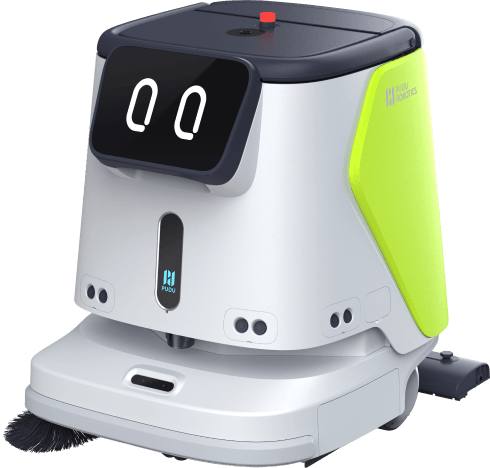
An autonomous floor scrubber can take on a planned floor-cleaning route while a trained employee handles other work. Restroom care, trash collection, detail cleaning, and unexpected problems still need people. The opportunity is to give those people more room in their shift.
Where autonomous cleaning can help
Start with the floor work that repeats.
A large corridor, open lobby, or predictable stretch of hard flooring is worth evaluating. Look at how often it gets cleaned, how much operator time it takes, and how reliably the area can be made available.
The workflow matters as much as the machine. Before choosing equipment, plan which tasks your crew will handle while it runs, how the floor will be prepared, and when the route will have the least traffic. Confirm the operating requirements for the specific model during a demonstration.
That gives you three practical reasons to consider it:
- Routine floor cleaning occupies a meaningful part of each shift.
- Other necessary work regularly gets delayed.
- Your facility has routes and cleaning windows suitable for autonomous operation.
A busy building can still be a candidate. You need to test it under the conditions your crew actually works in.
Put numbers against your own schedule
Before comparing equipment prices, measure the current job.
Here’s an illustrative calculation, not an Action customer result or a promised saving:
| Time on the same cleaning route | Per shift |
|---|---|
| Current hands-on operator time | 2 hours |
| Assumed hands-on time with an autonomous machine, including preparation, assistance, and cleanup | 30 minutes |
| Potential staff time recovered | 1.5 hours |
At five shifts per week, that would recover 7.5 staff hours a week, or 390 hours across 52 weeks.
Your result could be much lower. Interruptions, extra preparation, missed areas, or a shorter operating calendar change the calculation. A demonstration should establish the hands-on time for your building.
Then decide where the recovered hours would go. Would the crew catch up on restroom detail work? Finish tasks within the shift? Reduce overtime?
Those outcomes have different financial value. Moving an employee onto another necessary task adds cleaning capacity. It doesn’t automatically reduce payroll.
What does autonomous cleaning actually cost?
The purchase or lease payment is only part of the comparison.
Ask for the full cost of the proposed setup, including any software subscription, installation, mapping, training, service, batteries, and normal wear parts. Confirm what’s included and what creates an additional charge.
Compare that with the work you expect to recover over the same period. Use your actual labor cost and operating schedule.
Be careful with claims that a robot “costs the same as one employee.” A floor-cleaning machine handles a defined set of tasks. A custodian handles a much broader job. Comparing those two price tags alone won’t tell you whether the investment makes sense.
Someone still needs to own the process
Assign a trained employee and a backup before introducing the machine.
They need to understand preparation, starting procedures, alerts, routine care, and how to check the finished work. Build operator training, route testing, maintenance, and responding to alerts into your plan. Follow the requirements for the specific equipment you choose.
Ask your crew where they expect trouble. They know which hallway fills with carts, which entrance stays busy, and which area takes longer than the schedule suggests.
Their input can reveal whether you have a useful cleaning route or a route that will need constant intervention.
For a small facility with limited floor-cleaning time, conventional equipment may be the better investment. For a building with substantial repetitive floor work, an autonomous machine deserves a closer look.
Start with one route you can measure
Our recommendation is to bring one specific job to the conversation: the floor area, current machine, cleaning frequency, operator time, and tasks that keep getting pushed aside.
Then test whether the proposed equipment can clean that area to your standard while giving the crew usable time back. Record preparation, interruptions, cleanup, and any work that still needs finishing by hand.
Action works with facilities throughout Delaware, Pennsylvania, New Jersey, and Maryland. If repetitive floor cleaning is squeezing your schedule, tell us what your crew is handling now. We’ll help you work through whether autonomous cleaning makes sense for the job.
Questions or comments?